
Dr. Pratibha Gupta
Eye ClinicEmail Us
drpratibhagupta01@gmail.com
Call Now
+91 9354614950
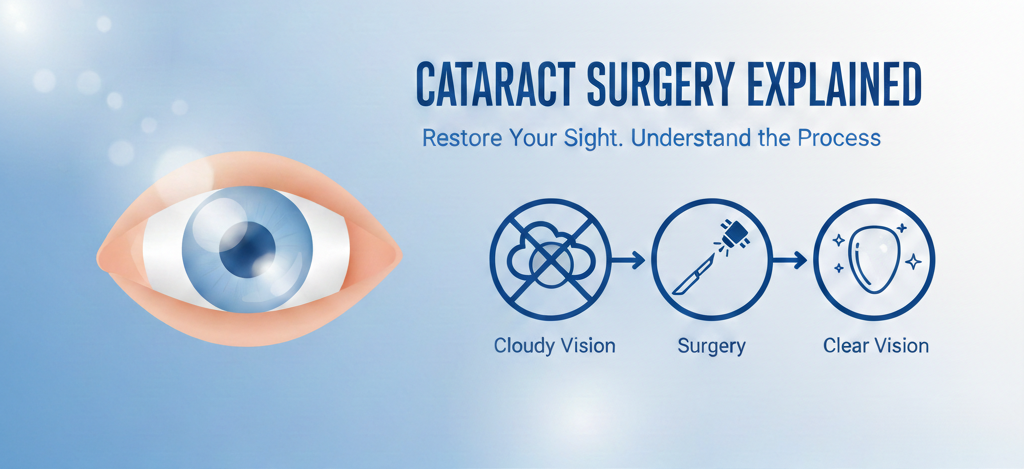
Cataract Surgery is a modern eye procedure designed to remove the cloudy natural lens of the eye and replace it with a clear artificial intraocular lens (IOL). Cataracts usually develop gradually with aging and may cause blurred vision, glare from lights, difficulty seeing at night, dull colors, and reduced clarity. When untreated, cataracts can significantly impact everyday activities such as reading, driving, watching television, and recognizing faces clearly.
The surgery is commonly performed using advanced Phacoemulsification technology, a minimally invasive method where ultrasonic energy breaks the cloudy lens into tiny fragments for gentle removal through a micro-incision. This stitch-free procedure is painless and usually completed within 15–20 minutes under local anesthesia. Most patients notice clearer vision within a short time and return to routine activities as advised by their eye specialist.
Patients can select from various intraocular lens options including Monofocal, Multifocal, and Toric lenses depending on visual needs and lifestyle preferences. Premium lens choices may reduce dependence on glasses and enhance overall visual performance. Cataract Surgery is considered highly safe, effective, and widely performed with excellent success rates in restoring bright and sharp vision.
Cataract surgery is a safe medical procedure that removes the cloudy lens of the eye and replaces it with a clear artificial lens to restore vision.
Cataracts usually develop due to aging, but may also occur because of diabetes, injury, or prolonged exposure to ultraviolet light.
Surgery is recommended when vision problems begin to interfere with everyday activities and glasses no longer provide clear improvement.
The surgeon removes the cloudy lens using advanced technology and implants a clear intraocular lens to restore sharp vision.
Cataract surgery is generally painless as it is performed under local anesthesia with minimal discomfort during recovery.
Phacoemulsification is a modern technique using ultrasonic energy to break and remove the cataract through a micro incision.
Patients can choose from different intraocular lenses based on their visual needs and lifestyle requirements.
Most patients experience clearer vision within days, with full recovery achieved in a few weeks with proper care.